












Construction Business Intelligence for Industrial Company
Enterprise BI services for a large, capital-intensive industrial company, built on MicroStrategy to enable executive visibility over construction and capital project performance.
Decision Clarity, Not Reporting Volume
The engagement focused on enabling executive and senior management visibility over construction and capital project performance, where cost, progress, contracts, and resources must be controlled across multiple projects and reporting periods.
Construction & Capital Project Dashboards
Using MicroStrategy, we designed and implemented a suite of custom BI dashboards and analytical reports tailored to construction and heavy-industry project environments.
Cost & Budget Performance
Project cost tracking, budget variance analysis, and financial performance monitoring across the portfolio.
Progress & Earned Value
Progress measurement, earned value indicators, and schedule performance metrics for project tracking.
Unit Cost & Production
Unit cost analysis, production-based metrics, and efficiency indicators for operational insight.
Resource & Productivity
Resource utilization tracking, productivity trends, and workforce performance analysis.
Contract & Variations
Contract management, variation tracking, and claim-related metrics for commercial control.
Portfolio Views
Consolidated views by project, location, period, and scope for enterprise-wide visibility.
Integrated Decision Intelligence
The BI environment enabled leadership to make informed decisions based on comprehensive, real-time project data.
Performance Visibility
- Compare planned vs. actual performance across cost, progress, and resources
- Drill down from portfolio level to individual project and contract items
- Monitor trends, risks, and deviations before they become critical
- Evaluate performance consistently across different projects and time periods
Data Integration
- Cost and budget control data integration
- Measurement and BoQ tracking systems
- Contract and change management workflows
- Cash flow by master codes layers
This replaced fragmented spreadsheets and static reports with a single, governed analytical environment designed to be scalable, repeatable, and institution-specific.
MicroStrategy Enterprise BI
Built on MicroStrategy, this solution delivers centralized project intelligence aligned with capital protection, not operational reporting.
Centralized Project Intelligence
Executive oversight consolidated in a single platform, replacing fragmented reporting systems.
Cost & Progress Transparency
Improved visibility across capital projects with clear cost and progress metrics.
Early Risk Visibility
Proactive identification of deviations and risks before they impact project outcomes.
Consistent Performance Metrics
Comparable, standardized metrics across the entire project portfolio for informed decision-making.
The BI structure was designed to be scalable, repeatable, and institution-specific, supporting long-term use rather than one-off reporting, delivering decision support aligned with capital protection, not operational reporting.
Related Projects
Explore Similar Work
 Digital & BI
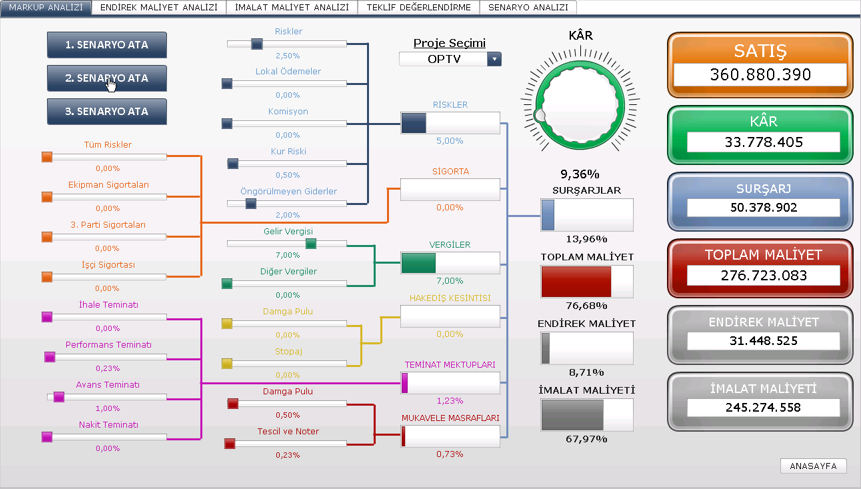
Markup & Bid Decision Intelligence Dashboard
Executive decision support system for owner-level bid approval built on SAP BusinessObjects for an ENR Top 100 international contractor.
 Digital & BI
Multi Family Developer Progress Management & ERP Implementation
Enterprise ERP and construction project management system implementation for Soyak Yapı, unifying finance, cost control, contracts, and site progress across 55,000+ homes portfolio.
 Digital & BI
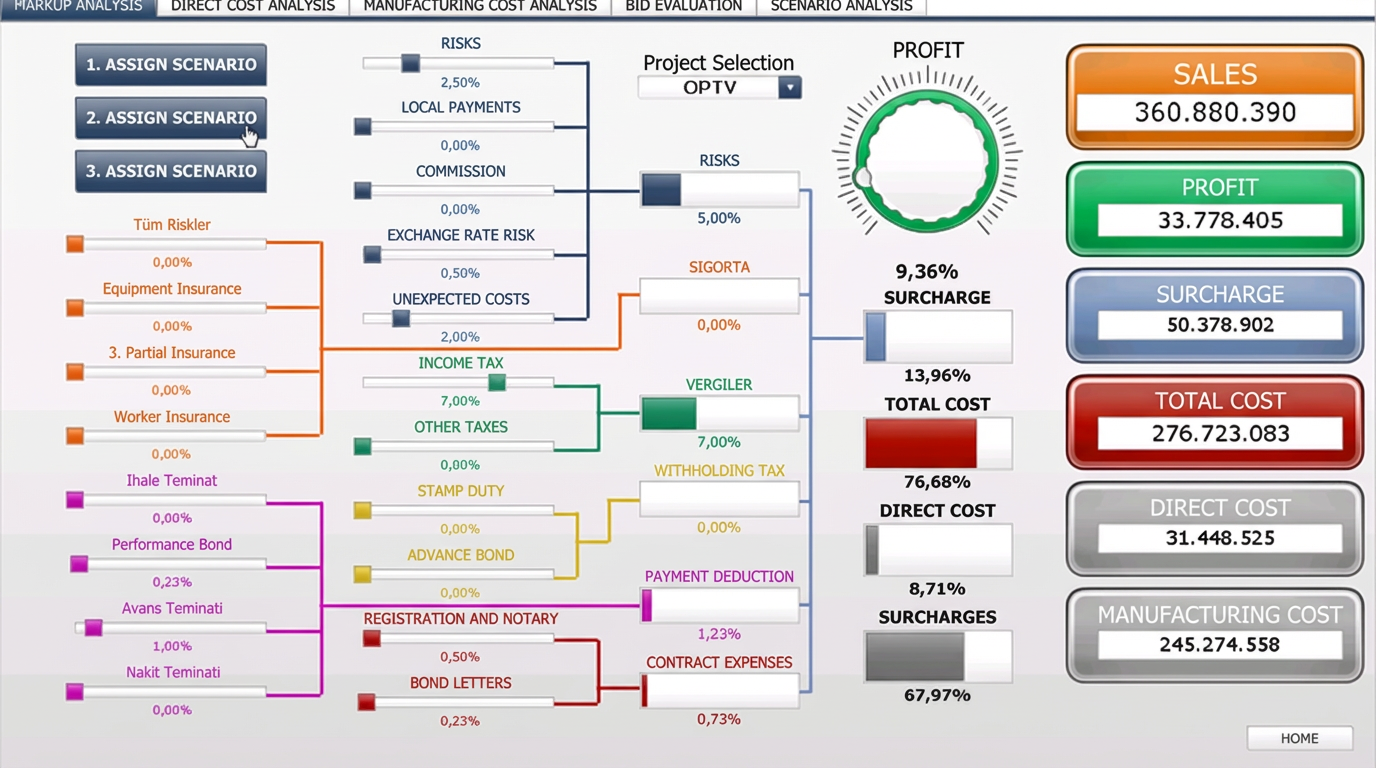
Bid Progress Management Framework
Enterprise-grade bid governance system for GAP İnşaat covering feasibility, tendering, pricing, risk, contract control, and executive decision reporting.