










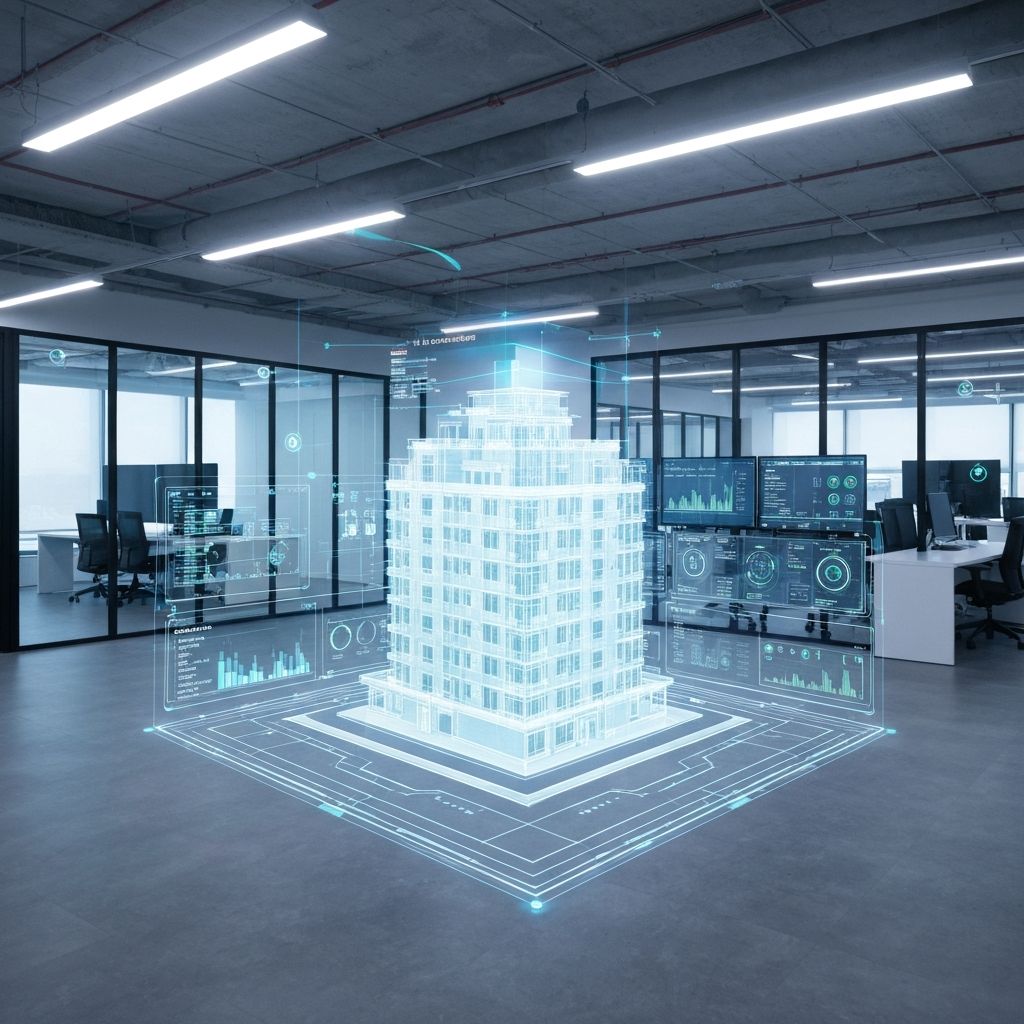
A digital twin is a dynamic, data-connected virtual replica of a physical asset or system. In construction, this means creating a living model that mirrors the actual building -- not just its geometry, but its performance, condition, and behavior in real time. While BIM captures design intent, a digital twin captures operational reality.
Beyond BIM: What Makes a Digital Twin
A digital twin differs from a BIM model in three critical ways: it is continuously updated with real-world data from IoT sensors, it includes operational and environmental parameters beyond geometry, and it supports predictive analytics that can forecast future states. A BIM model tells you what was designed. A digital twin tells you what is actually happening.
Construction Phase Applications
During construction, digital twins enable real-time progress monitoring by comparing as-built conditions against the design model using LiDAR scans and drone imagery. They can detect structural deviations as small as 2mm, identify potential conflicts between installed work and planned installations, and provide automated quality assurance that catches issues the human eye might miss.
- LiDAR-based progress tracking with millimeter-level accuracy
- IoT sensor integration for environmental monitoring during curing
- Predictive structural analysis using real-time load data
- Automated as-built documentation updated continuously
- Energy performance simulation based on actual construction conditions
Operations and Maintenance
The greatest value of a digital twin emerges after construction when the building enters its operational phase. Predictive maintenance algorithms can identify equipment failures before they occur, optimize energy consumption based on occupancy patterns, and reduce operating costs by 15-25% compared to traditional reactive maintenance approaches.
A BIM model is a snapshot of design intent. A digital twin is a living, breathing representation of operational reality.
As sensor costs decrease and connectivity improves, digital twins will become standard practice for any building or infrastructure asset valued above $50M. Early adopters are already seeing competitive advantages in both project delivery and asset management.